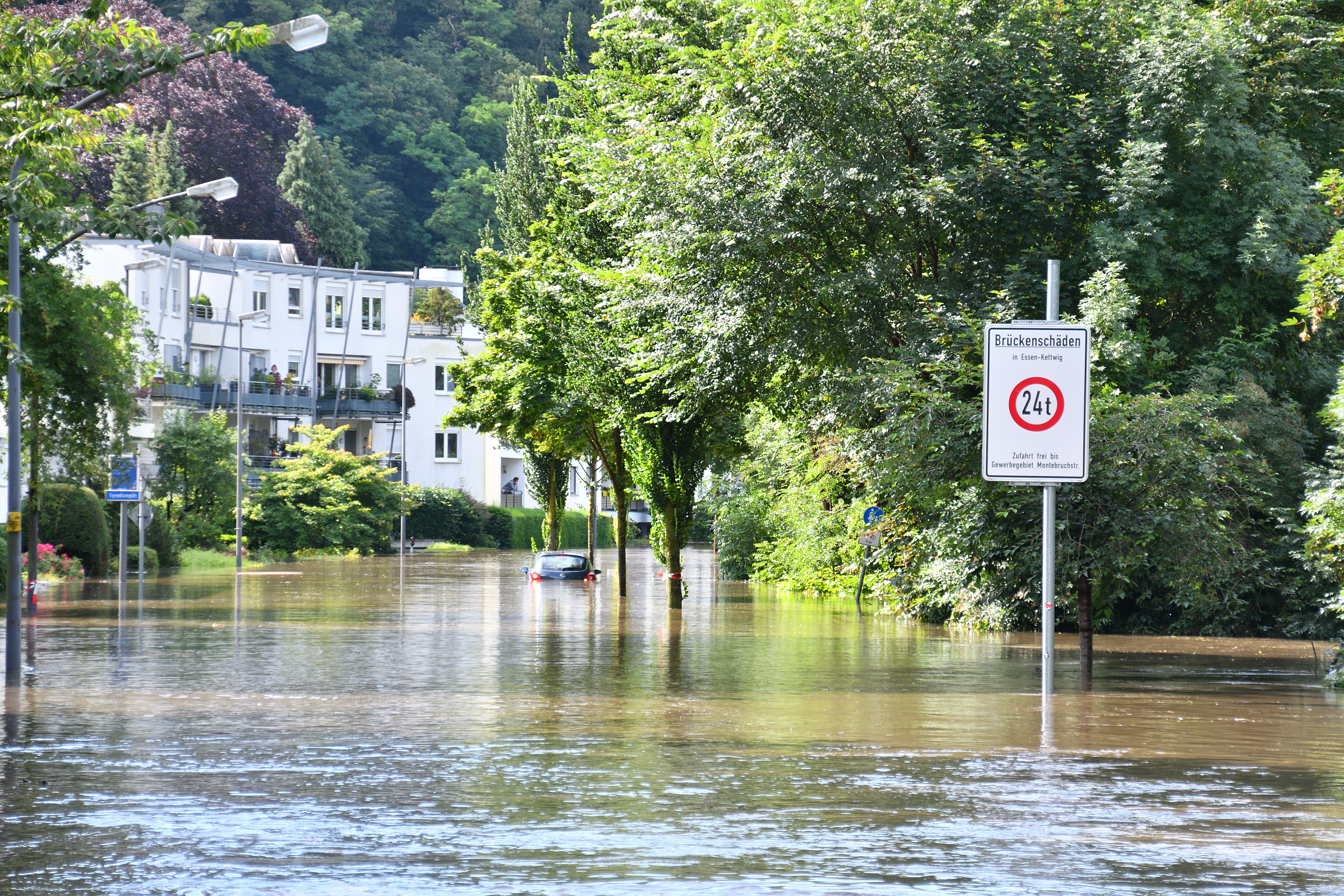
Field trip to Wark dam, Luxembourg
Article
Challenges and Opportunities in Flood Recovery
Recovery is a crucial phase in flood risk management and an essential part of the disaster risk management cycle, alongside mitigation, preparedness, and response. It is acknowledged as one of the focus points in the upcoming years in the European strategies and the implementation of the EU Floods Directive, but experience at scale is limited. Moreover, recent examples of the July 2021 floods in Germany, Belgium and The Netherlands and the 2024 floods in Valencia have shown that effective recovery is far from straightforward.
Recovery bridges emergency response and long-term development. The response phase focuses on immediate disaster relief: cleaning damaged buildings, restoring access, providing temporary shelter and food, and carrying out urgent repairs to essential services1. The longer-term rebuild phase concentrates on the reconstruction of homes, businesses, and critical infrastructure. It also involves studies on resilient redesign, “Build Back Better” (BBB) strategies, reviewing building permits in flood-prone zones, and improving flood protection and early warning systems. Both phases demand close cooperation between affected communities, local authorities, national governments. Assistance from neighbouring countries has also proven to be very helpful in some cases.

Disaster relief
In the early response period, meeting basic needs like food, water, healthcare and housing is a priority. In Wallonia, more than 1.4 million meals were distributed after the 2021 floods to victims over a period of eight months1. Around 3,500 people required rehousing; some stayed with family, friends, or volunteers, while others were assisted by public authorities. In Rhineland-Palatinate, 13% of interviewed flood victims were still living in temporary housing one year after the flood2. Health care is essential for both physical and psychological needs. In Wallonia, a team of workers with a psychosocial profile were recruited to support affected people in the aftermath of the flood1. Functioning of health care facilities can form an additional challenge: in North Rhine-Westphalia, around 68 hospitals were impacted in the 2021 floods3.

By learning from past events, authorities can strengthen preparedness, speed up recovery, and ensure that rebuilding contributes to a safer and more resilient future.

Ferdinand Diermanse
Flood Risk Expert, Deltares
Critical infrastructure
Floods often severely disrupt critical infrastructure. Drinking water systems can fail due to power outages, contamination, or damaged pipelines. During the 2024 Valencia floods, the Júcar-Turia canal, a vital freshwater resource for the city, was destroyed in two places. A siphon system was quickly put in place to restore flow and later a temporary pipeline was installed. Power supply systems, also essential for functioning other critical infrastructure, were heavily damaged after the 2021 floods, but largely restored within weeks, thanks to rapid emergency mobilization. Gas supply networks also suffered major damage: in Rhineland-Palatinate, 133 km of natural gas pipes and 8,500 gas meters were destroyed4, while in Wallonia approximately 7,000 gas meters were affected1.
Sewage and wastewater systems are critical for public health. In the Ahr Valley, contaminated wastewater flowed into streams and rivers due to failing sewage treatment plants and wastewater pipes4. Failure to telecommunication infrastructure can lead to further cascading impacts of flood events. Destroyed masts in the Ahr Valley cut off digital radio in 20214 and in The Netherlands, approximately 7,000 households lost service3. Transport infrastructure is particularly vulnerable to flooding, with bridges being both vital and fragile elements. When bridges are destroyed, access routes are cut off, hindering evacuation, rescue, and supply efforts. In the Ahr Valley, more than half of the 112 bridges were destroyed, 13 severely damaged, and only 35 remained operational a month after the flood3. Even four years later, reconstruction work continues.
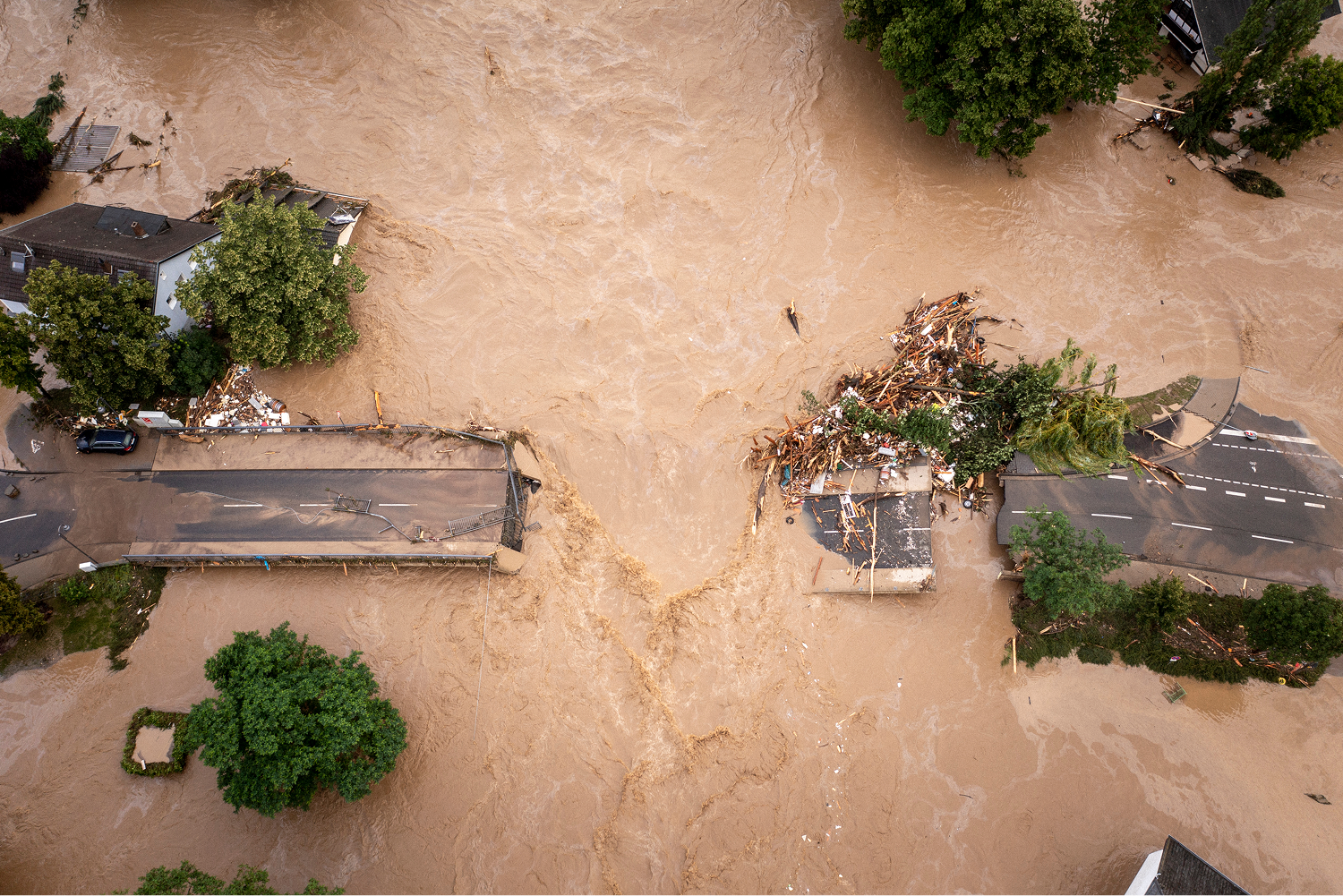
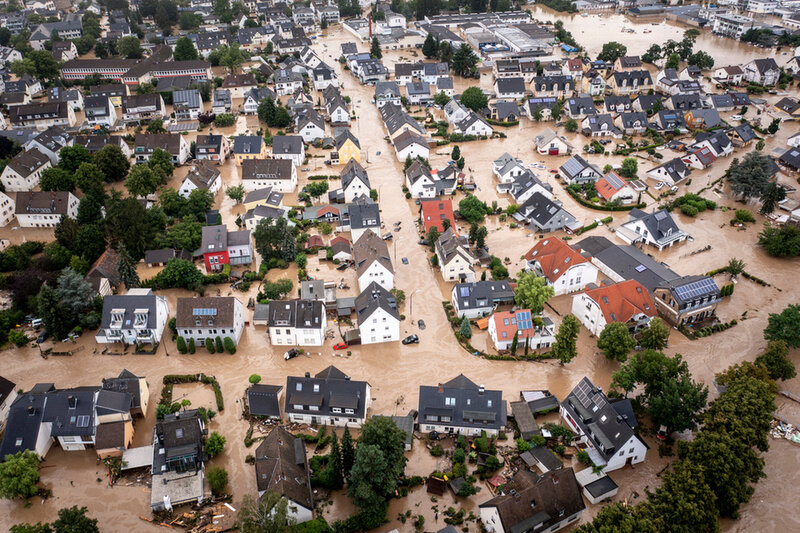
Impact of 2021 floods in the Ahr valley, Germany
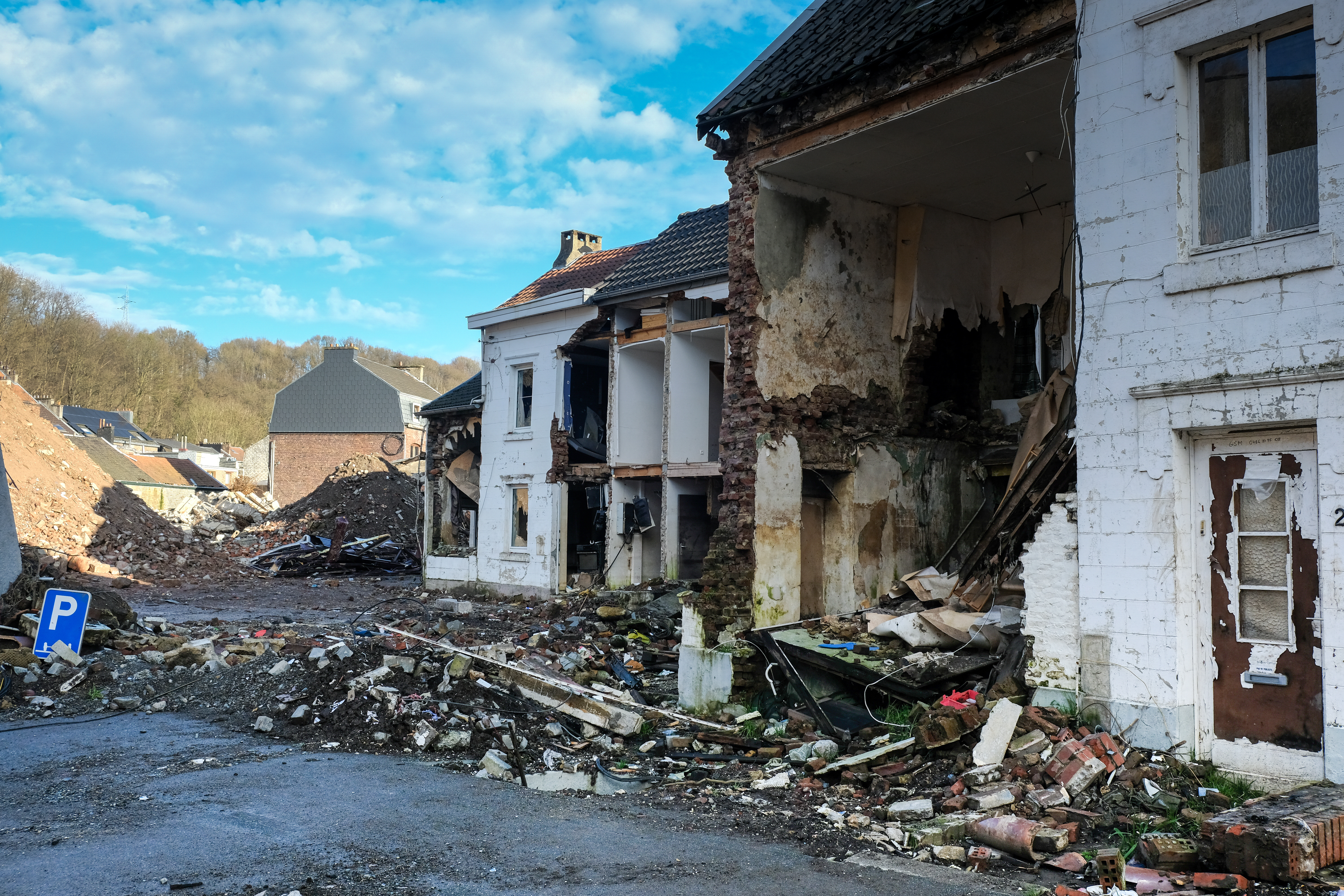
Impact of 2021 floods in Belgium
Funding
Swift coordinated financial support in recovery is crucial to prevent long-term delays. Financing recovery relies on a mix of donations, insurance, disaster funds, and public loans. In Wallonia, flood victims initially would have received only about 20% of required compensation from insurers5. After government intervention, insurers nearly doubled their coverage limits. The national government subsequently granted a ten-year €1.2 billion loan to the Walloon Region to fill the remaining funding gap.
In Germany, flood insurance is optional but excluded in high-risk zones6. In the Netherlands, since 2018, most insurers have covered floods from regional waterways, but not from major rivers such as the Rhine and Meuse7. In the Netherlands, in total about 600 million Euros were made available by insurers and the federal government.
Reconstruction and Build Back Better
The 2015 Sendai framework for Disaster Risk Reduction highlights the strategy of Build Back Better (BBB), i.e. to make buildings and infrastructure more resilient and consider relocation outside high-risk areas. In theory, BBB can reduce future disaster risk, yet putting these principles into practice remains challenging. Many damaged structures are rebuilt as before, without significant improvements in resilience. Public protection programmes may reduce the urgency for households to take proactive measures at the building level. Flood insurance can both help and hinder BBB depending on how the insurance system is designed. In some cases, the primary goal is to restore property to its original condition; other policies promote adaptive behaviour after disasters6. The 2021 flood event did cause a shift towards implementation of more wet-proofing measures6.

To conclude
While each flood event has unique characteristics, many recovery challenges are shared across regions. The recent floods in Germany, Belgium, the Netherlands, and Spain highlight the importance of strong coordination, resilient infrastructure, and accessible funding mechanisms. These experiences provide valuable lessons for future recovery efforts across Europe. By learning from past events, authorities can strengthen preparedness, speed up recovery, and ensure that rebuilding contributes to a safer and more resilient future.
Ferdinand Diermanse
Flood Risk Expert, Deltares
Ferdinand Diermanse is a senior researcher/consultant with an M. Sc. in applied mathematics and a Ph. D. in hydrology, both from Delft University of Technology. He is an expert in the field of flood risk assessment, flood risk management and climate adaptation with over 25 years of work experience. He has carried out flood risk assessments for a variety of inland and coastal water systems in over 20 countries and published numerous papers on this topic.
References


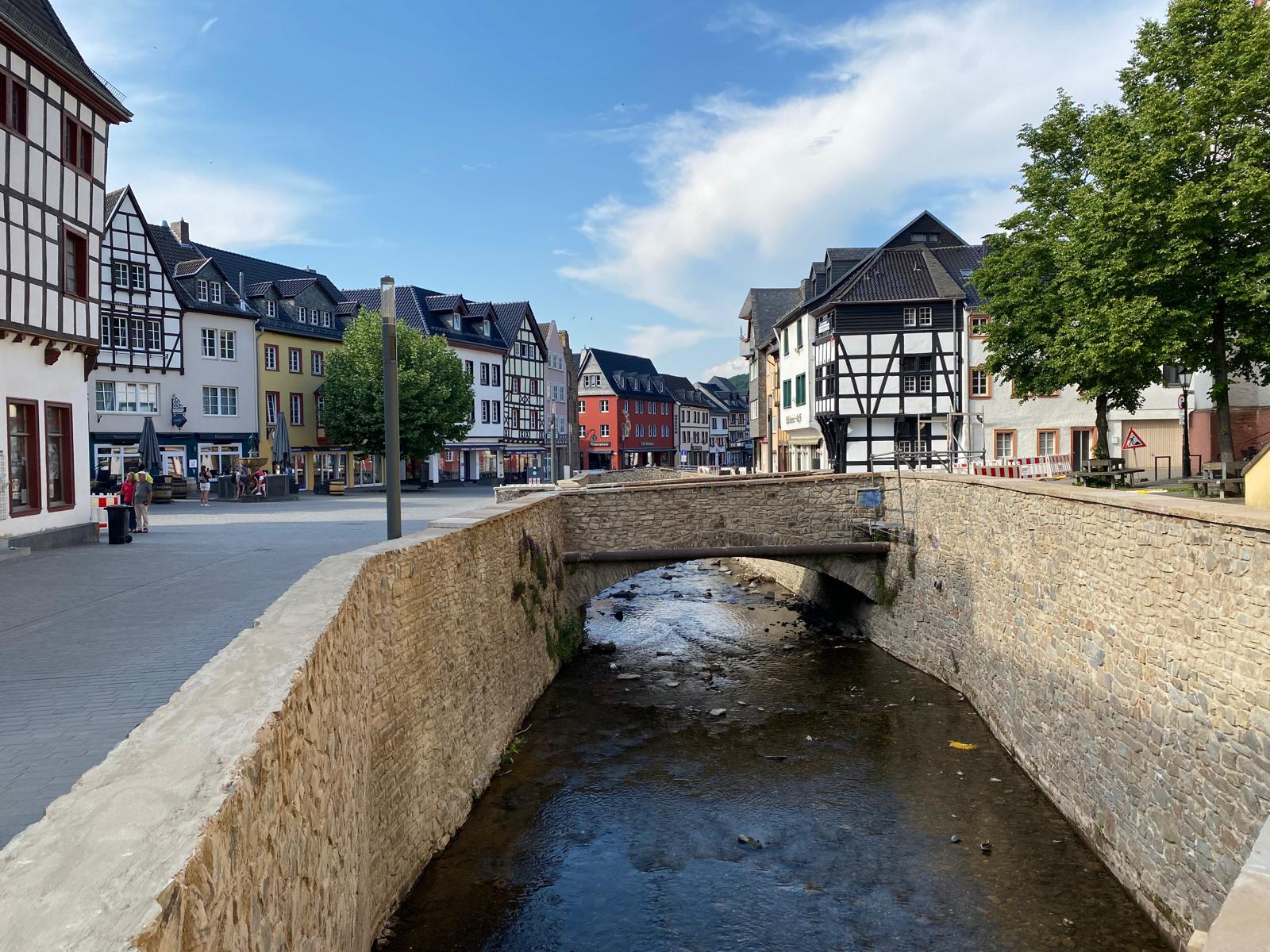
Reconstructed bridge and walls within the city of Bad Münstereifel, North Rhine-Westphalia, Germany
After the Flood
From immediate response to long-term rebuilding
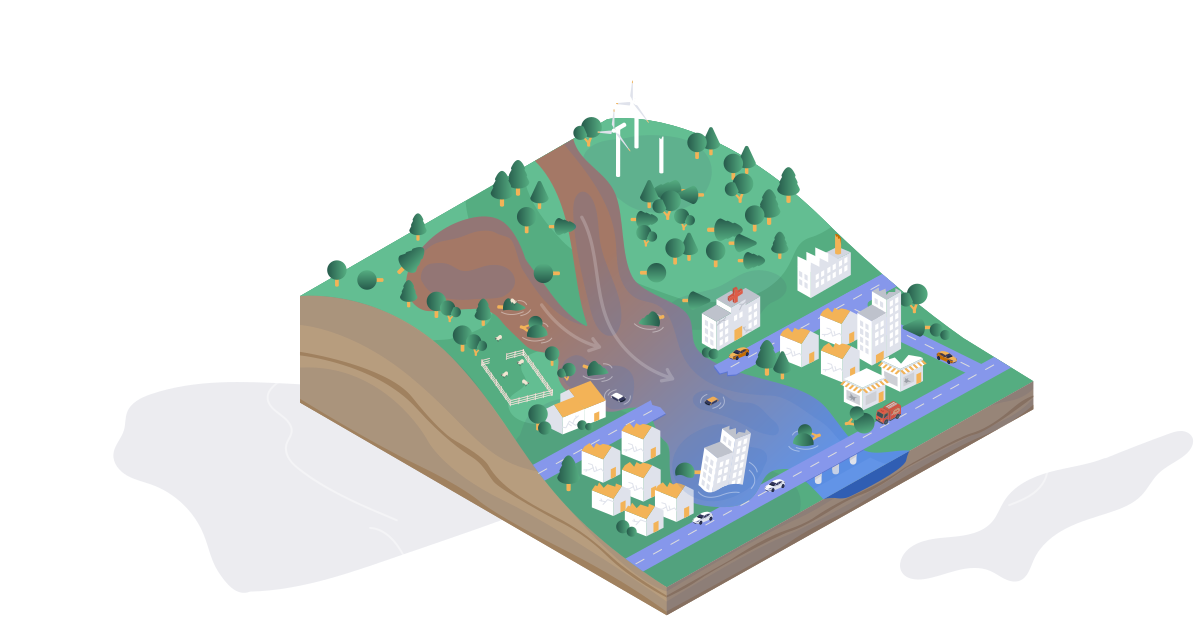

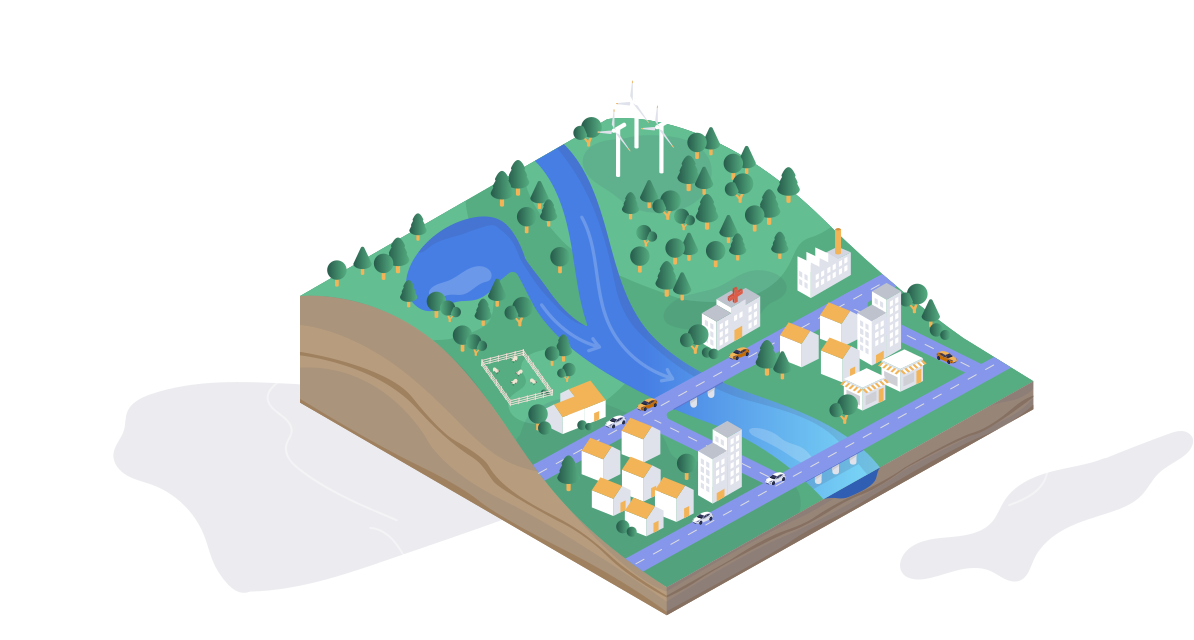
In the early recovery period, there is generally an urgent need to provide basic human needs to those who are most affected by the flood event. People need food, water, healthcare and (temporary) housing for those whose houses have been severely damaged or destroyed. The required resources generally come from a wide variety of organisations like NGO’s, governmental agencies and the general public. A centralized coordination to mobilize and distribute the resources efficiently is crucial.


In the early recovery period, there is generally an urgent need to provide basic human needs to those who are most affected by the flood event. People need food, water, healthcare and (temporary) housing for those whose houses have been severely damaged or destroyed. The required resources generally come from a wide variety of organisations like NGO’s, governmental agencies and the general public. A centralized coordination to mobilize and distribute the resources efficiently is crucial.





Response
Disaster relief
In the early recovery period, there is generally an urgent need to provide basic human needs to those who are most affected by the flood event. People need food, water, healthcare and (temporary) housing for those whose houses have been severely damaged or destroyed. The required resources generally come from a wide variety of organisations like NGO’s, governmental agencies and the general public. A centralized coordination to mobilize and distribute the resources efficiently is crucial.

Response
Rebuild





Response
Rebuild
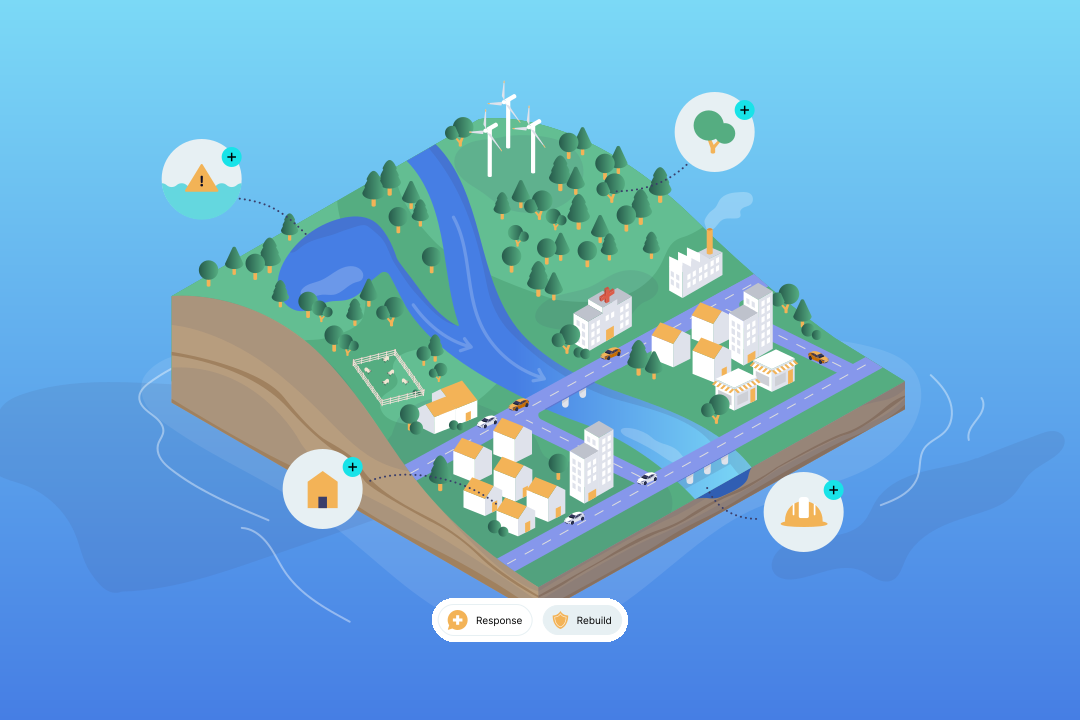
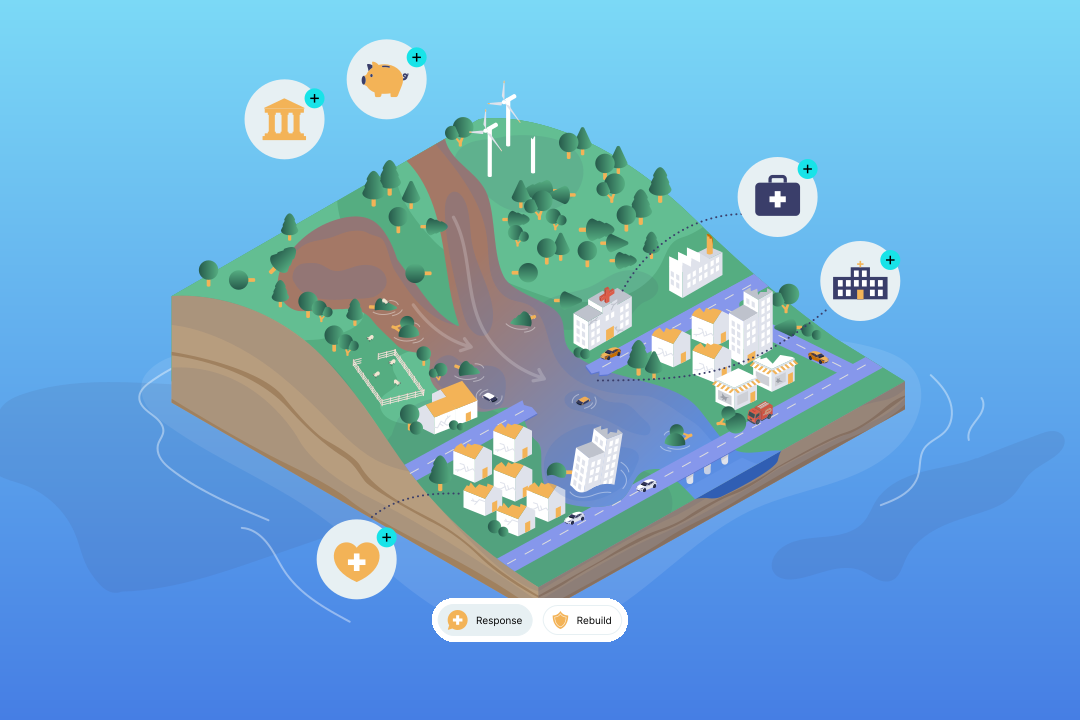
Build Back Better (BBB)
The 2015 Sendai framework for Disaster Risk Reduction highlights the strategy of Build Back Better, i.e. to make buildings and infrastructure more resilient and consider relocation outside high-risk areas. Putting these principles into practice remains challenging. Often, damaged structures are rebuilt as before, without significant improvements in resilience. Public protection programmes may reduce the urgency for households to take proactive measures at the building level. Flood insurance can both help and hinder BBB depending on how the insurance system is designed. In some cases, the primary goal is to restore property to its original condition; other policies are incorporate incentives for resilience improvements.
Environmental impacts
Flood waters in a built environment may collect pollutants such as oil, heavy metals, pesticides, fertilizers, sewage and industrial chemicals. These contaminants are carried into rivers, lakes, wetlands and groundwater systems and may cause long-term pollution. In addition, floodwaters can strip away topsoil, which is the most fertile layer needed for plant growth. This not only reduces agricultural productivity but also destabilizes riverbanks and landscapes. Sediment transported during floods can accumulate elsewhere, burying vegetation, wetlands, or habitats.
Houses and public infrastructure
Rebuilding, replacing or relocating damaged houses and damaged public infrastructure like bridges, roads and railways may take years to complete. Roads damaged by flooding may require rebuilding the subgrade, improving drainage systems, and stabilizing surrounding slopes. Bridge repairs can be especially complex because they may involve structural strengthening and addressing foundation scour. Furthermore, the flood may be an incentive to redesign the bridge to be able to withstand larger discharges. Damaged houses may suffer from issues with mold or weakened foundations and walls. Households may also lack the financial means to rebuild or repair.
Reducing flood impact
In addition to flood protection, a range of measures can be taken to reduce the impact for events surpassing the level of protection. Restrictions on building on vulnerable floodplains can be put in place, as well as incentives to build outside floodplains (such as lower insurance costs). Homes can be elevated or flood-proofed. Improved flood forecasting and flood early warning systems can be put in place to reduce the risk of casualties. And evacuation plans can be set up and practiced with particular attention to the needs of the most vulnerable population.
Disaster relief
In the early recovery period, there is generally an urgent need to provide basic human needs to those who are most affected by the flood event. People need food, water, healthcare and (temporary) housing for those whose houses have been severely damaged or destroyed. The required resources generally come from a wide variety of organisations like NGO’s, governmental agencies and the general public. A centralized coordination to mobilize and distribute the resources efficiently is crucial.
Critical infrastructure
A severe flood event is likely to affect several critical infrastructures. Power supply systems may be damaged, which is also essential for functioning other critical infrastructure. Drinking water systems can fail due to power outages, contamination, or damaged pipelines. Failure of sewage and wastewater systems can critically affect public health and failure to telecommunication infrastructure can lead to further cascading impacts of flood events. Rapid repair and/or temporary fixes of these critical infrastructures are crucial.
Health care
The need for health care is likely to increase substantially during and after a flood event, as flood affected people may be severely injured. This will put a burden on the available capacity of health care facilities and health care workers. To make matters worse, health care facilities may be impacted as well by the flood and/or hard to reach due to flooded and damaged roads. In addition to physical injuries, the stress caused by the flood can be expected to lead to an increase in mental health issues.
Funding
Financing recovery relies on a mix of donations, insurance, disaster funds, and public loans. Ensuring that resources reach all affected groups quickly and efficiently is critical. Funding is needed for various purposes like food, temporary housing, repairs of critical infrastructure, support for industries, farmers and businesses whose operations are disrupted. Directing funds without excessive administrative burden, while clearly identifying beneficiaries and their needs is a challenge.
Coordinating multi-level governance
One of the key recurring challenges in recovery is the fact that different actors are involved: municipalities, provincial authorities, water authorities, national ministries, and civil society organisations. Keeping these actors aligned requires constant engagement, transparency, and patience. Clear coordination is fundamental, as in or after emergency situations, lines of responsibility can sometimes be blurred. Quick establishment of an institutional leader, or leading commission, that can set directions and guide action, is therefore a major success factor.


References
1. CSR, 2022: 1 an après les inondations Bilan de la gestion post inondations et continuité de la reconstruction. Report de Commissariat Spécial à la Reconstruction, Wallonie.
2. Truedinger, A., Jamshed, A., Sauter, H. and Birkmann, J., 2023. Adaptation after Extreme Flooding Events: Moving or Staying? The Case of the Ahr Valley in Germany. Sustainability 2023, 15. https://doi.org/10.3390/su15021407.
3. Koks, E. Van Ginkel, K., Van Marle, M. and Lemnitzer. A., 2022. Brief communication: Critical infrastructure impacts of the 2021 mid-July western European flood event. Nat. Hazards Earth Syst. Sci., 22, 3831–3838, 2022. https://doi.org/10.5194/nhess-22-3831-2022.
4. Schaum, S., Stenger-Wolf, S., Schüttrumpf, H. and Jüpner, R., 2025. An Overview of Long-Term Temporaries After Flood Disasters. Journal of Flood Risk Management, 18 (3), 2025. https://doi.org/10.1111/jfr3.70109.
5. Lietaer, S., Nagabhatla, N., Scheerens, C., Mycroft, M. and De Lombaerde, P., 2024. Blind Spots in Belgian Flood Risk Governance: The Case of the Summer 2021 Floods in Wallonia. United Nations University Institute on Comparative Regional Integration Studies. Research report No. 2, 2024.
6. Endendijk, T., Rodriguez Castro, D., Dillenardt, L. Kumar Guntu, R., Botzen, W., De Moel, H., Thieken, A., Kreibich, H. Dewals, B. and Aerts, J., 2025. Flood experience and access to insurance contribute to differences in homeowners’ post-disaster adaptation in a cross-border region of Western Europe. Nature Communications Earth & Environment | (2025) 6:426.
7. Endendijk, T., Botzen, W., De Moel, H., Aerts, J., Duijndam, S., Slager, K., Kolen, B. and Kok, M., 2023. Experience From the 2021 Floods in the Netherlands: Household Survey Results on Impacts and Responses. Journal of Coastal And Riverine Flood Risk, Vol. 2, 2023, 9.