
Interview
From floods to long-term resilience in Limburg
The floods of July 2021 was a wake up call for Limburg and the Netherlands. One year after the floods the programme ‘Waterveiligheid and Ruimte Limburg’ was started to make Limburg more flood resilient. In this interview, Michael Theuns, Deputy for the Province of Limburg, reflects on leading such a complex programme, the lessons learned since 2021 and the opportunities for cooperation across borders.
Michael Theuns
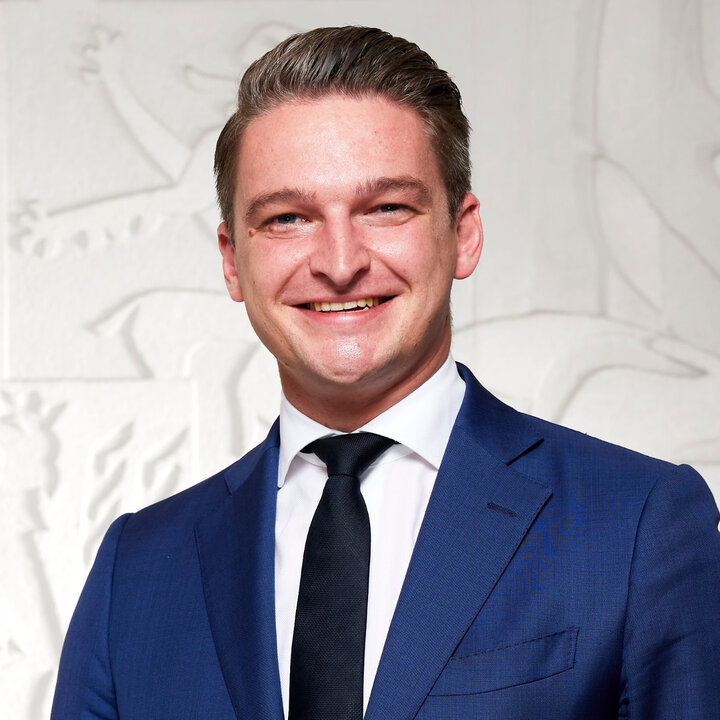
What are the biggest challenges in the WRL programme?

Michael
The biggest challenge is also the greatest strength: the large number of authorities involved. We are not used to working with so many partners at once. After 2021 it was clear that no single authority could manage this alone. But that means reinventing how we work together and dealing with procedures that were never designed for this type of collaboration.
“Water does not respect boundaries, but our procedures often do.”
Why do you also see this as an opportunity?
Michael
Because everyone shares the same sense of urgency and the same goal. That creates momentum. Nationally, WRL is seen as a pilot, not only because of the content but also because of the way cooperation is organised.
How does WRL work with neighbouring countries?
Michael
Although they are not formally part of WRL, we work closely with them. I recently met authorities in the Voer region in Belgium to align research and measures. Much of our water comes from abroad, so cooperation is essential. German parliamentary committees have also visited us to learn from our approach.
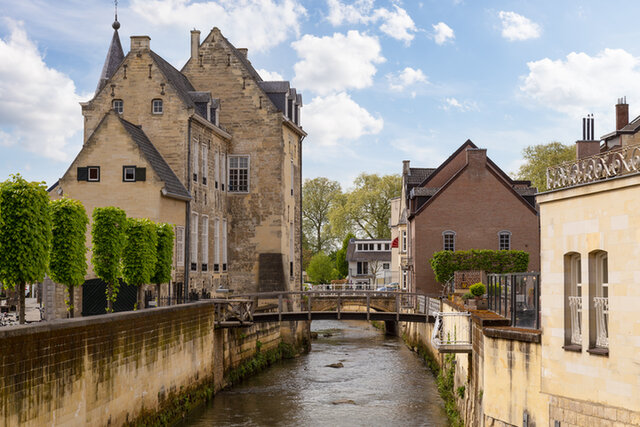
Valkenburg in Limburg, with the river Geul flowing through the city.
How can the process be accelerated?
Michael
By balancing short term visibility with long term commitment. Programmes like this take time. The implementation of the Delta Works for example took decades. In Limburg some measures from the 1990s are still being completed. At the same time residents want improvements quickly. You must show clear progress while keeping sight of the full fifteen-year horizon of the WRL programme.
When will WRL be successful?
Michael
When Limburg is measurably safer within the available frameworks and within fifteen years. In 2021 the works along the Meuse clearly made a difference. Climate change brings more extreme events, but water safety can be improved. Flooding can never be prevented entirely, but risks can be reduced.
What role does spatial planning play?
Michael
A very important role. Limburg is a landscape of valleys and hills. Not everything can be solved with physical measures. We must design the landscape so that water stays where it falls, avoid erosion sensitive cropping on slopes and build new homes in safer locations.
What role can Europe and the Benelux play?
Michael
A significant one. Many European regions face the same challenges. Cross border systems for warnings, planning and cooperation would help everyone. Europe can support this financially, technically and by encouraging regions to learn from one another. We see that Benelux can play a role in developing joint approaches with regards to flood resilience.
“Many regions face the same issues. It makes sense to learn from each other instead of each region reinventing the wheel.”

What can we learn from the chaotic period right after the flood?
Michael
In a flood crisis roles must be clear. In the Netherlands this is the responsibility of the regional authorities responsible for safety (‘veiligheidsregio’ in Dutch), the regional water authority and Rijkswaterstaat. WRL focuses on the long-term planning and implementation and preparing for flood extremes. One year after the flood, the administrative agreement that created WRL was signed. In this one year in between, restoration of infrastructure and cleaning etc. were coordinated by the Municipality and water authorities.
The insights from Michael Theuns show that recovery in Limburg depends on shared responsibility, long term commitment and cooperation across administrative and national boundaries. WRL demonstrates that resilience requires more than technical measures: it needs aligned institutions, thoughtful spatial planning and a willingness to learn from others. By bringing these elements together, Limburg aims to prepare its communities for a future with more extreme weather.
Michael Theuns
Deputy for the Province of Limburg
